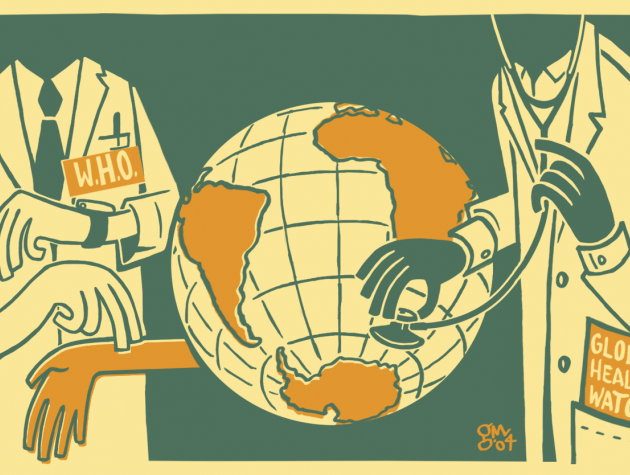
GEG WP 2009/55 Health Financing in Brazil, Russia and India





Full Title: Health Financing in Brazil, Russia and India: What Role Does the International Community Play?
Authors: Devi Sridhar and Eduardo J. Gomez
Type: GEG Working Paper 2009/55
Abstract
In this paper we examine whether Brazil, Russia and India have similar financing patterns to those observed globally. We assess how national health allocations compare with epidemiological estimates for burden of disease. We identify the major causes of burden of disease in each country, as well as the contribution HIV/AIDS, tuberculosis and malaria make to the total burden of
disease estimates. We then use budgetary allocation information to assess the alignment of funding with burden of disease data. We focus on central government allocations through the Ministry of Health or its equivalent. We found that of the three cases examined, Brazil and India showed the most bias when it came to financing HIV/AIDS over other diseases. And this occurred despite evidence indicating that HIV/AIDS (among all three countries) was not the highest burden of disease when measured in terms of age-standardized DALY rates. We put forth several factors building on Reich’s (2002) framework on ‘reshaping the state from above, from within and from below’ to help explain this bias in favour of HIV/AIDS in Brazil and India, but not in Russia: ‘above’ influences include the availability of external funding, the impact of the media coupled with recognition and attention from philanthropic institutions, the government’s close relationship with UNAIDS (UN Joint Programme on HIV/AIDS), WHO (World Health Organization) and other UN bodies; ‘within’ influences include political and bureaucratic incentives to devote resources to certain issues and relationships between ministries; and ‘below’ influences include civil society activism and relationships with government. Two additional factors explaining our findings cross-cutting all three levels are the strength of the private sector in health, specifically the pharmaceutical industry, and the influence of transnational advocacy movements emanating from the USA and Western Europe for particular diseases.
Author Bios
Devi Sridhar is a Senior Lecturer in Global Health Policy at the University of Edinburgh and a Senior Research Fellow at the Blavatnik School of Government at Oxford University. She currently leads the global governance workpackage of the EU FP7 project Go4Health (Setting health-related development goals beyond 2015) and is PI of the project 'Research Priorities to Reduce Global Child Mortality: Integrating Governance and Epidemiology'.
Eduardo J. Gómez is a Senior Lecturer (Associate Professor) of International Development and Emerging Economies at King's College London, King's International Development Institute. A political scientist by training, his research focuses on the role of institutional theory in domestic and international health policy. More specifically, his research explores how formal and informal institutional designs and change processes shape domestic government and international agency responses to disease.